01
Prioritise before you rush
Pause long enough to identify what is urgent, what can wait, what needs escalation and what must be handed over clearly.
 DAPHNE'SCAREER DEVELOPMENTBasket
NEWLY QUALIFIED NURSE
The first months are not about knowing everything. Build reliable routines for prioritisation, escalation, communication, reflection and asking for help while your confidence catches up with your responsibility.
BUILD SAFE CONFIDENCE
Pause long enough to identify what is urgent, what can wait, what needs escalation and what must be handed over clearly.
Asking for senior input is part of safe practice. Know local escalation routes and use them when a situation moves beyond your competence or confidence.
Ask for specific feedback after shifts, tasks or difficult situations and turn it into one practical improvement rather than a vague judgement about yourself.
Build a repeatable documentation routine that is timely, factual and consistent with local policy and professional standards.
Keep short notes on new situations, what you learned, questions to revisit and evidence for your preceptorship or professional portfolio.
Confidence often grows slowly. Compare what you can manage now with your first week rather than comparing yourself with experienced colleagues.
30 / 60 / 90 DAYS
Learn local routines, escalation routes, common workflows, documentation expectations and who to ask when you are unsure.
Focus on prioritisation, communication, time management and recognising patterns in the situations that still make you hesitate.
Use feedback and reflection to improve decision-making, prepare stronger examples of your progress and identify the next development goal.
Use breaks, boundaries, debriefing, support and realistic expectations. Exhaustion is not evidence of competence.
Write down what has changed, what you can now manage, what feedback you have received and what support you still need.
PRACTICAL SUPPORT
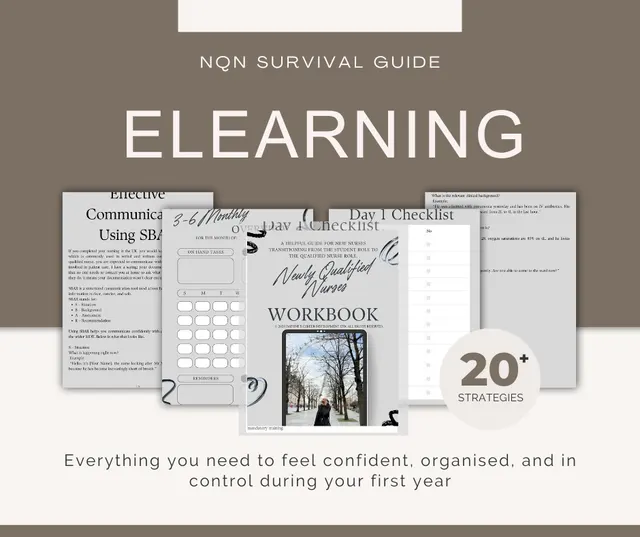
A low-cost practical guide for the early transition into registered nursing practice.
View Survival Guide →Structured learning for the move from student mindset to professional responsibility and day-to-day practice.
View Transition eLearning →When you are ready to look beyond the first months, build a simple progression plan for the next stage.
Read Career Progression Guide →COMMON QUESTIONS
The transition can feel intense because responsibility rises quickly. Use preceptorship, senior support, escalation processes and specific feedback rather than expecting yourself to feel fully confident immediately.
Safe prioritisation, escalation, communication, documentation and learning local systems are more important than trying to look as fast or independent as an experienced colleague.
Build confidence through repetition, supervision, reflection and gradually increasing responsibility. Confidence should follow safe competence, not replace it.
Keep evidence that is appropriate and non-confidential: feedback, reflections, learning activity, development goals, quality work and examples of professional growth. Never retain patient-identifiable information.
You can notice interests and strengths from the start, but there is no need to rush. First build a safe foundation, then use your growing evidence to make deliberate next-step decisions.
START WITH THE FOUNDATION
Use practical guidance to reduce guesswork, build safe confidence and create a stronger foundation for the nurse you are becoming.